
Is bioethanol dangerous?
What's really in your gas flame? The differences in safety, air quality, and daily use, clearly explained.

Warmth is more than a flame
BIO-ETHANOL RISKS
- Flash point 13°C (lower than petrol)
- Vapors at room temperature
- Burns freely from reservoir
- Frayed wires = immediate fire risk
- Alcohol smell during use
- Soot from incomplete combustion
TENDERFUEL BENEFITS
- Flash point +100°C, not spontaneously flammable
- Combustion controlled via wick
- Liquid does not readily ignite at room temp.
- Soot-free and odorless
- Stable flame for daily use
- Specially developed Steel Wick
What exactly is bioethanol?
-
Fierce, unpredictable flame. Difficult to control when turning on and off
-
Sharp alcohol smell: noticeable in the room, annoying with prolonged use
-
Risk of smoke and soot. When combustion is not optimal, soot is produced
-
Spilling = immediate danger. Spilled liquid or vapor can ignite very quickly
-
Flammable vapors above an open reservoir. Can unexpectedly ignite, especially immediately after refilling
What is Tenderfuel?
-
Flashpoint +100°C. The liquid does not spontaneously ignite at room temperature
-
Controlled combustion: calm, stable flame without flare-ups
-
No smoke, no soot, no strong odor. Your interior stays clean
-
Designed for everyday use. No stress, no extra security measures needed
Bio-ethanol vs Tenderfuel
| Property | Bioethanol | Tenderfuel |
|---|---|---|
| Flashpoint | 13°C (lower than gasoline) | +100°C |
| Combustion method | Free from reservoir | Controlled by wick |
| Spontaneous combustion | Yes, via steam | ✓ No |
| Soot | Possible | ✓ No |
| Smell | Strong alcohol odor | ✓ Odorless |
| Risk of spilling | High | ✓ Low |
| Daily use | With extra caution | ✓ Yes |
| Air quality | Negative emissions (particulate matter) | ✓ Minimum |
| Surface contamination | Black residue possible | ✓ None |

Tenderfuel Starterpack
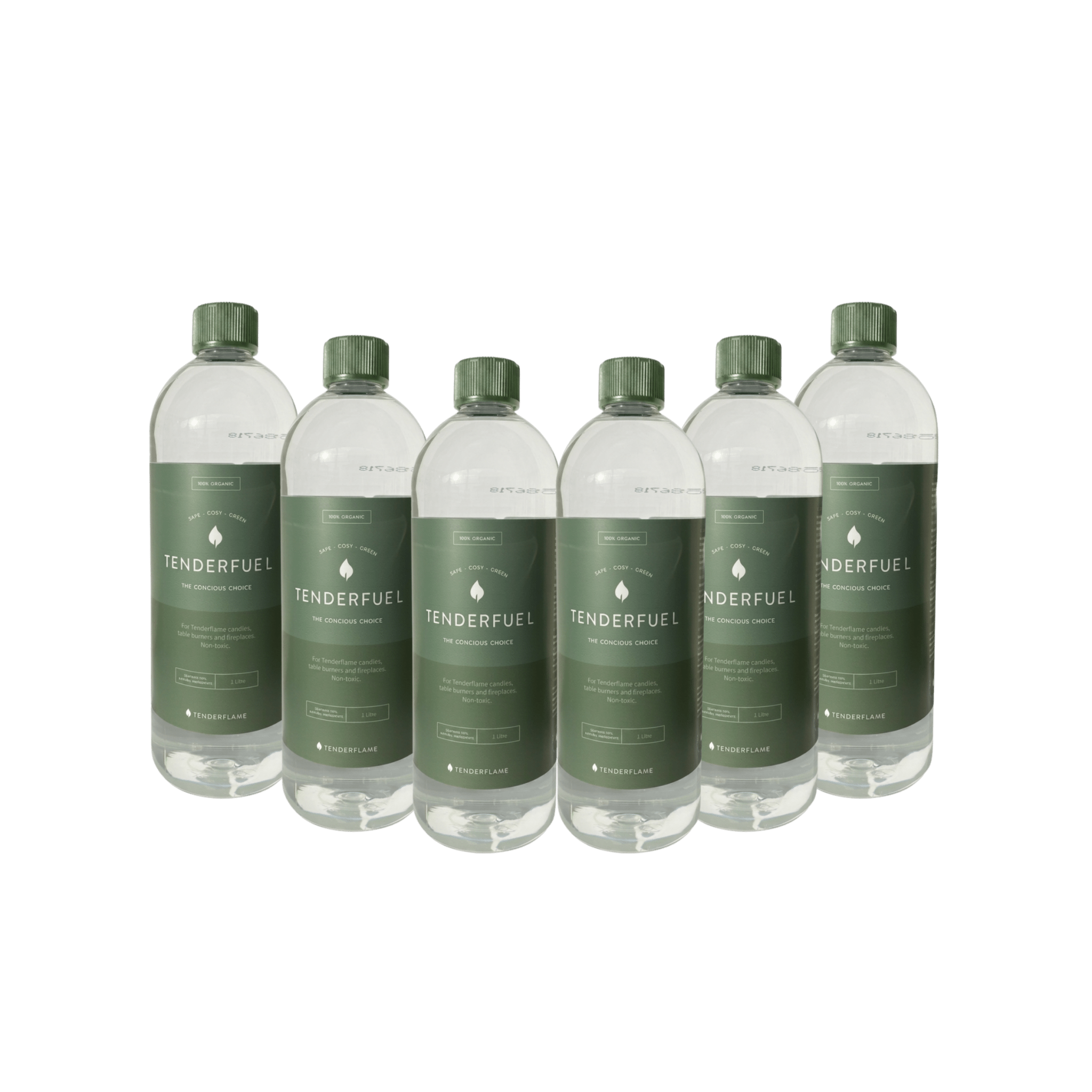
6x 1L Tenderfuel
- Regular price
- €71,94
- Regular price
-
- Sale price
- €71,94

Lilly 10 Giftset

Lilly 10 Copper + 0.5L Tenderfuel Giftset
- Regular price
- €27,90
- Regular price
-
- Sale price
- €27,90

Shop Packs

Breeze 10, 2-Pack
- Regular price
- €49,90
- Regular price
-
- Sale price
- €49,90
What makes smoke and soot harmful?
Why you can trust Tenderflame
Expertise
Tenderflame developed Tenderfuel in collaboration with fuel experts, specifically formulated for the Steel Wick.
Authority
Certified products, available through authorized retailers across Europe.
Reliability
Thousands of satisfied customers, transparent about fuel composition and safety.
What are users saying?
Reviews from customers who have switched from bio-ethanol to Tenderfuel.
"I used to have a bio-ethanol burner and always found the smell unpleasant. Since switching to Tenderfuel, there's truly no comparison; no smell, no soot, the flame is calmer, and I feel much safer with it."
"My windows were always blurry after an evening with candles. Now with the Tenderflame Lilly, they stay clear. No more bioethanol for me, this is a completely different experience."
"Frankly, I was skeptical, but the flashpoint of +100 degrees convinced me. Bioethanol at 13 degrees... that's lower than gasoline. I don't want that in my house anymore."
"We had a small accident with our previous bio-ethanol burner; it splattered when lighting. With Tenderfuel, it just feels safe. Good product, clear explanations on the website."


